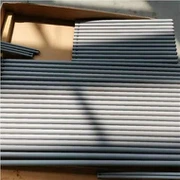
Ceramic pipes have huge advantages in industrial production
Jul 01, 2021
In the ceramic industry, with the development of new materials and conveying technology, it is gradually replaced by the latest wear-resistant materials such as special ceramics. The wear-resistant ceramic tube is a composite tube that uses the thermite-centrifugal method to combine ceramic and metal organic to form a composite tube. The thermite-centrifugal method prepares the ceramic-lined steel pipe using the high temperature generated by the reaction itself to melt the reaction products and separate them under the action of centrifugal force to form a steel pipe lined with alumina ceramics, with low energy consumption and fewer processes.
Ceramic tube combines the advantages of high alumina hardness, good chemical inertness and steel. It has excellent wear resistance, corrosion resistance, heat resistance, thermal shock resistance and mechanical shock resistance. Its service life is more than 15 times longer than that of ordinary steel pipes. The pipe is generally white.
The lining ceramic layer of the wear-resistant ceramic elbow is wear-resistant engineering ceramics, with a hardness (HRA) ≥84, and its wear resistance is more than 10 times that of high-chromium wear-resistant cast iron alloy pipe fittings. Using a 5mm thick ceramic layer, its actual wear-resistant service life will be equivalent to 50mm thick wear-resistant cast steel.
The wear-resistant ceramic pipe itself has the ability to withstand high temperatures above 1200 degrees Celsius. Through reasonable design and the use of different composite methods, the wear-resistant ceramic pipe fittings can operate for a long time in the humidity range of -50°C to 800°C, which is especially suitable for high-temperature burners.