
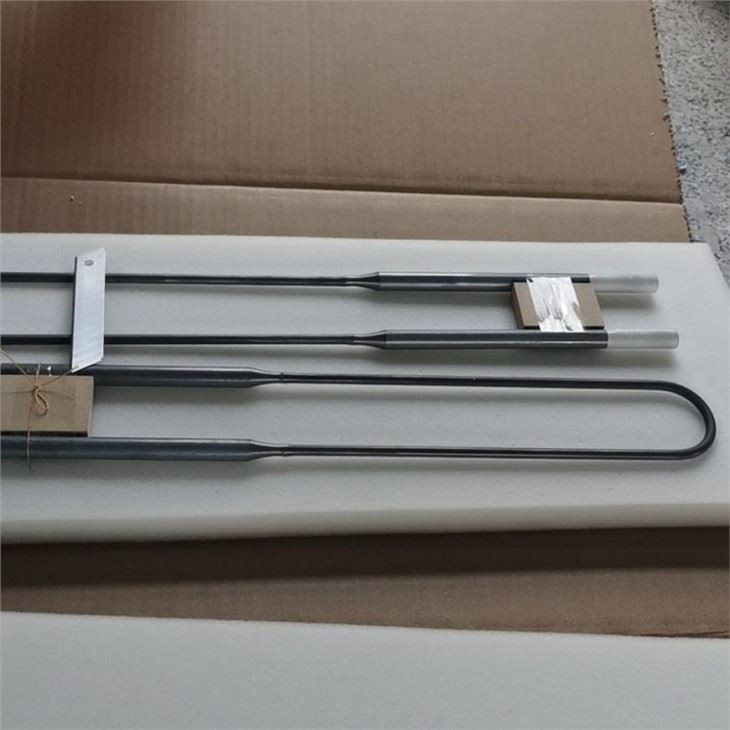
Ceramic Parts for Glass Tempering Furnace
Molybdenum disilicide furnace heating element has unique high temperature oxidation resistance. Its working temperature ranges from 1700℃~1900℃. And specifications could be customized.
We always focus on the Ceramic Fiber, high alumina ceramic rods, 1 2 inch ceramic bushings industry, actively seek model innovation and management breakthroughs, and constantly improve our comprehensive strength and competitive advantage. We hope that our employees will pursue the continuous optimization of work style and efficiency in the process of work, and continuously improve the work level. We try our best to provide agile, reliable and value-added services to meet the ever-changing high requirements of customers. We establish the balanced development of the company and society as our own development strategy, and pay attention to balancing the interests of all parties and gradually improving and enhancing the company's social performance. With the rapid development since its inception our company has served to a great majority of customers through continuous innovation philosophy and pre-market awareness.
Products Description
Molybdenum disilicide furnace heating element has unique high temperature oxidation resistance. Its working temperature ranges from 1700℃~1900℃. And specifications could be customized.
Properties
1. In an oxidizing atmosphere, the maximum operating temperature is about 1700°C, and the resistivity of MoSi2 increases rapidly as the temperature rises.
2. Under normal circumstances, the resistance of the element does not change with the length of time of use. Therefore, the old and new silicon molybdenum rod electric heating elements can be mixed.
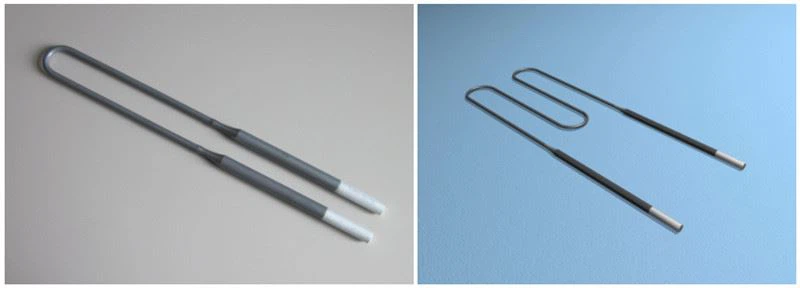
How to distinguish the new process silicon molybdenum rod and the old process silicon molybdenum rod?
1. Distinguish from the color of silicon molybdenum rod:
The new process silicon molybdenum rods are silver-gray as a whole and have very good gloss. The old silicon molybdenum rod is dark black overall, and the color is not very good. Therefore, it can be distinguished from the color whether it is a new process silicon molybdenum rod or an old process silicon molybdenum rod.
2. Distinguish from the appearance of silicon molybdenum rod:
The appearance of the new process silicon molybdenum rod is very regular. Since the hot end of the new process silicon molybdenum rod is hot-pressed with a mechanical arm, the curvature of the hot end bend is very good. However, the appearance of the old process silicon molybdenum rod is not very regular, because the old process silicon molybdenum rod is bent into a U-shape from a mud billet and then fired, so the curvature of the hot end bend is irregular. Therefore, it can also be distinguished from the appearance whether it is a new process silicon molybdenum rod or an old process silicon molybdenum rod.
Q&A
1. What is the payment terms?
T/T, L/C, Credit card.
2. How long is the service life?
Depend on your application environment
As a brand committed to becoming a century-old enterprise, we have always taken it as our mission to create Ceramic Parts for Glass Tempering Furnace with leading technology. We have accumulated rich experience in management and production, and have gained recognition and praise from all our customers, as well as a high reputation in the industry. We have the world's most advanced production equipment and technology, while fully implementing good operating practices.
Hot Tags: furnace heating element, China, suppliers, manufacturers, factory, customized, wholesale, cheap, pricelist, low price, free sample, alumina bisque ceramic rods, Ceramic Tube, Alumina Ceramic Sheet, electric heating pad coil, ceramic fiber gasket material, ceramic alumina tiles
 Low Thermal Conductivity Heat Resistance Insulation ...
 1700c Laboratory Gas Protection Vertical Heating Que...
 Customized Electric Heating Element for Water Heater...
 Ceramic Cleaner Cone Nozzle for Paper Machine Spare ...
 Ceramic Fiber Corrosion Fire Resisting Aluminum Coat...
 Full Flat Element/Infrared Ceramic Heater
Send Inquiry